
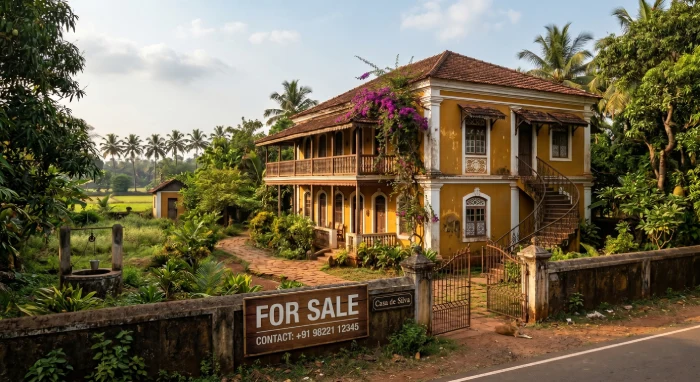
Sell Old House Goa | Margao & Fatorda Redevelopment Guide
If you own an old independent house in Margao, Fatorda, or nearby South Goa urban pockets, your property may be worth far more than you think. In 2026, developers are actively looking for prime plots in established neighborhoods where land availability is limited and redevelopment potential is strong.
Many owners looking to sell old house Goa properties only think about the value of the structure. But builders think differently. They look at land size, road access, zoning, Floor Area Ratio, redevelopment potential, and whether the plot can support apartments, boutique commercial units, or mixed-use development.
This means an aging single-storey home, especially in a central location, may be more valuable as a redevelopment asset than as a resale house.
The Rising Demand for Prime Plots in South Goa’s Urban Centers
Margao and Fatorda are among South Goa’s most active urban zones. They offer strong connectivity, established infrastructure, schools, hospitals, markets, offices, and access to both residential and commercial demand. But there is one major challenge: space is limited.
As available open plots reduce, developers are turning toward older independent homes, Portuguese-style houses, and single-storey Goan homes that sit on usable land parcels. Many such properties are located in prime neighborhoods but are underutilized from a development perspective.
This has created a strong opportunity for sellers.
A developer may not be interested in your old house because of its age or design. They may be interested because the land can support a boutique apartment block, a small commercial complex, serviced residences, or a premium residential redevelopment project.
For sellers, this is where property redevelopment Goa becomes important. Instead of listing the home as a standard resale property, you can position it as a redevelopment opportunity. That can attract a very different buyer profile and potentially a better deal.
However, not every old house will appeal to developers. They typically check road width, plot shape, title clarity, zoning, access, existing structures, setbacks, and permissions. This is why professional valuation and developer screening matter before you begin negotiations.
Understanding F.A.R. (Floor Area Ratio) and Your Property’s True Value
The biggest mistake many sellers make is valuing their property only by land area or emotional worth. Developers value land through its buildable potential.
This is where F.A.R., or Floor Area Ratio, becomes critical.
F.A.R. determines how much construction may be allowed on a plot, subject to applicable regulations, zoning, road access, and approvals. A property with higher permissible development potential may be significantly more valuable to a builder than a similar-sized plot with limited usable potential.
For example, two old houses may sit on similar plot sizes, but one may have better road frontage, cleaner title, favorable zoning, and stronger redevelopment scope. That property may attract better developer offers.
Sellers should also understand that commercial zoning Margao can influence value. If a property is located in or near a commercially viable pocket, a developer may explore shops, offices, clinics, mixed-use development, or premium rental-led projects. This can increase interest from builders, depending on permissions and feasibility.
Key factors that affect redevelopment value include:
- Plot size and shape
- Road width and access
- Zoning and land-use classification
- F.A.R. / permissible development potential
- Existing structure condition
- Title clarity and ownership history
- Setbacks and planning restrictions
- Market demand in that micro-location
A normal residential buyer may focus on bedrooms, bathrooms, and renovation cost. A developer focuses on what can be legally built. That is why sellers should get a redevelopment-focused valuation before accepting an offer.
Should You Sell Outright or Enter a Joint Venture (JV)?
Once you decide to sell land to builders South Goa, the next question is whether to sell outright or enter a Joint Venture.
An outright sale is simpler. The developer buys the property, pays the agreed amount, and takes over ownership after registration. This gives the seller immediate liquidity and avoids long-term project risk.
An outright sale may be better if you want:
- Quick payment
- Clean exit
- No involvement in construction
- No future approval or market risk
- Immediate division of proceeds among family members
A Joint Venture, or JV, works differently. Instead of selling the land completely, the landowner partners with the developer. The developer builds the project, and the landowner receives either a share of built-up area, revenue, profit, or a combination of payment and units.
A JV can offer higher long-term upside, but it also comes with risks. Construction may be delayed, approvals may take time, project sales may be slower than expected, and agreement terms must be extremely clear.
A JV may suit sellers who:
- Do not need full immediate payment
- Want future income or units
- Own a highly valuable plot
- Trust the developer’s track record
- Are comfortable with a longer timeline
Before agreeing to a JV, sellers should review developer credibility, project feasibility, timelines, revenue-sharing terms, approval responsibilities, penalty clauses, and exit options.
This is where expert negotiation matters. A poorly structured JV can trap the seller in delays. A well-negotiated deal can unlock long-term value.
Tax Implications of Selling to a Developer
Selling an old house or land to a developer may have tax implications, and sellers should not ignore them.
In an outright sale, capital gains tax may apply depending on the cost of acquisition, holding period, indexed cost, sale value, and applicable exemptions. If the property is inherited, the original purchase details and ownership history may also matter.
In a JV, taxation can be more complex. The timing of capital gains, valuation of built-up area received, revenue share, and agreement structure can all affect tax treatment. Sellers should also consider TDS, stamp duty, registration costs, and GST-related issues where applicable.
Because redevelopment deals can involve high values, tax planning should begin before signing any agreement. A seller should speak with a qualified tax advisor or legal professional before finalizing either an outright sale or JV.
Builders & Brokers can help coordinate the right professional review so sellers understand the commercial and compliance side before committing.
We Connect Sellers with Verified Local Developers
Selling an old independent house to a builder is not the same as selling to a family buyer. The negotiation is more technical, the due diligence is deeper, and the value depends on redevelopment feasibility.
Builders & Brokers helps property owners in Margao, Fatorda, and South Goa position their old homes and land parcels for the right developer audience.
Their approach is designed to protect sellers and maximize value.
Builders & Brokers helps by:
- Evaluating the property’s redevelopment potential
- Reviewing title and basic documentation readiness
- Understanding zoning, access, and builder interest
- Connecting sellers with verified local developers
- Comparing outright sale and JV options
- Helping sellers avoid undervalued offers
- Coordinating legal, valuation, and negotiation support
This is especially useful for owners who do not know whether their old house is simply a resale property or a high-potential redevelopment asset. Many sellers accept the first offer without realizing that a developer may value the plot differently.
Builders & Brokers brings market knowledge, local developer connections, and a seller-first approach to the process. Whether you want a clean builder buyout or want to explore a JV, their team helps you understand the real opportunity before entering the market.
If you own an old house in Margao, Fatorda, or nearby urban South Goa, do not list it blindly. Get the land, zoning, F.A.R., title, and developer demand assessed first. The right strategy can turn an aging property into a premium redevelopment deal. Also, check our blog on why buyers reject POA property sale.
FAQs
1. Is it better to sell old house Goa properties to families or builders?
It depends on location, plot size, condition, and redevelopment potential. If the house is old but sits on prime land, builders may offer stronger value than normal homebuyers.
2. What do developers look for before buying old houses in Margao or Fatorda?
Developers usually check plot size, road access, zoning, F.A.R., title clarity, setbacks, location demand, and whether the land can support a profitable project.
3. Should I sell outright or choose a JV for property redevelopment Goa?
An outright sale gives faster payment and a clean exit. A JV may offer higher long-term upside but involves more risk, time, and legal complexity.
4. Does commercial zoning Margao increase my property value?
It can, depending on the exact location, permissions, access, and market demand. Commercial or mixed-use potential may make a property more attractive to developers.
5. How can Builders & Brokers help me sell land to builders South Goa?
Builders & Brokers helps assess redevelopment value, review documentation, connect sellers with verified local developers, compare offers, and structure a safer sale or JV discussion.


