
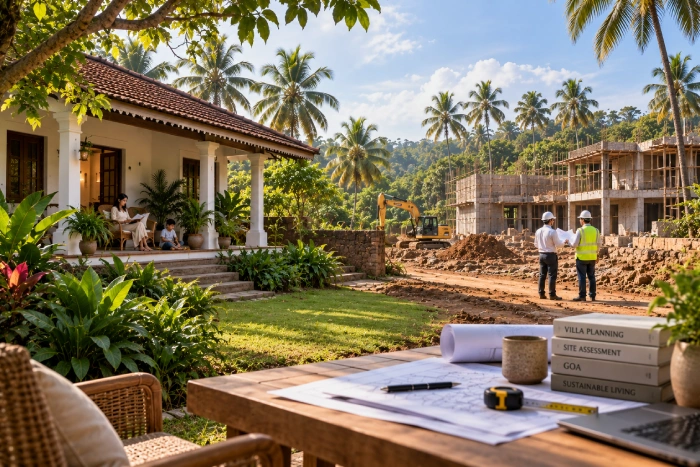
Developing South Goa Land While Family Lives On-Site: What to Plan
Many South Goa landowners do not want to vacate an entire family property simply because one portion is being considered for villa development.
The existing house may still be occupied by parents, siblings, caretakers or other family members. The family may want to continue living there while construction progresses on another part of the land.
That can be practical, but it needs more planning than simply drawing a boundary around the construction area.
Daily access, privacy, dust, worker movement, security, utilities, noise and emergency access all need to be considered before work begins.
If your family plans to continue living on South Goa land while another portion is developed, Builders & Brokers can help you organise the owner-side questions, development brief and coordination points before construction activity begins.
Quick Answer: Can a Family Continue Living on Land During Development?
Potentially, yes.
But the occupied home should be treated as an active part of the site-planning discussion, not as an area that construction teams will simply “work around.”
Owners should plan:
- Separate access where possible
- Safe family movement
- Construction vehicle routes
- Worker access
- Temporary fencing
- Dust and noise management
- Utility continuity
- Security
- Parking
- Emergency access
- Communication between the family and project team
The exact arrangement should be reviewed by the appropriate professionals for the project.
Define the Occupied Area Clearly
The first step is identifying the part of the property that must remain usable by the family.
This may include:
- Existing house
- Garden
- Parking area
- Well
- Outdoor sitting area
- Clothes-drying area
- Domestic staff space
- Pet area
- Family access path
- Utility rooms
Do not assume that only the house itself needs protection.
A home can become difficult to live in if construction blocks the driveway, removes parking, disrupts water supply or places workers immediately beside private living areas.
Builders & Brokers can help owners list these everyday requirements before the project layout becomes fixed.
Separate Family Access From Construction Access
One of the most important planning questions is how people and construction vehicles will move through the property.
Ideally, the family should not have to share the same narrow route continuously with:
- Trucks
- Concrete vehicles
- Excavation equipment
- Material deliveries
- Contractor vehicles
- Worker motorcycles
- Waste-removal vehicles
Where separate access is possible, it can significantly reduce conflict.
Where access must be shared, the project team should define:
- Delivery times
- Parking rules
- Vehicle turning areas
- Pedestrian movement
- Gate control
- Temporary restrictions
- Emergency access
The family should always know when unusually heavy site activity is expected.
Create a Physical Separation Between Home and Site
A construction site should not gradually expand into family living space.
Temporary fencing, barricades or another appropriate separation can help define:
- Construction zone
- Family zone
- Worker route
- Material-storage area
- Machinery area
- Waste area
- Visitor access
The exact safety arrangement should be designed and managed by the relevant site professionals.
For the landowner, the objective is to avoid an informal setup where tools, materials and workers move freely around the occupied house simply because both areas are within one property.
Protect Family Privacy
Privacy can become a major issue when a previously quiet family home turns into an active development site.
Workers may have direct views into:
- Bedrooms
- Verandahs
- Gardens
- Courtyards
- Kitchens
- Outdoor bathrooms
- Family recreation areas
Owners should raise privacy during the planning stage.
Possible measures may include:
- Temporary screening
- Relocating worker routes
- Adjusting material-storage areas
- Restricting access to private portions
- Setting clear worker boundaries
- Keeping certain gates locked
- Establishing designated rest areas away from the occupied home
These are small planning decisions that can make months of construction much easier for the family.
Plan for Dust and Debris
Construction activity can create dust from:
- Excavation
- Demolition
- Cutting
- Vehicle movement
- Material handling
- Sand and aggregate
- Dry ground
The project team should have an appropriate site-management plan.
The family should also consider how dust could affect:
- Open windows
- Outdoor furniture
- Vehicles
- Laundry
- Gardens
- Water-storage areas
- Elderly residents
- Children and pets
Do not wait until the first major excavation to discuss dust control.
Agree on Working Hours and High-Impact Activities
Construction noise can affect family life even when the physical construction area is well separated.
High-impact activities may include:
- Demolition
- Drilling
- Cutting
- Excavation
- Concrete work
- Material unloading
- Machinery operation
Owners should understand the expected work pattern and how unusual activities will be communicated.
This becomes particularly important when the family includes:
- Elderly members
- Young children
- People working from home
- Students
- Residents with fixed daily routines
The project should still comply with applicable local requirements, and the construction team should manage operations appropriately.
Protect Utility Continuity
An existing family home may depend on utility systems that pass through the proposed construction area.
Before work starts, map relevant services such as:
- Electricity
- Water lines
- Pumps
- Wells
- Tanks
- Drainage
- Septic systems
- Internet cables
- External lighting
- Irrigation
This should form part of the wider exercise to map existing site features before villa design, so wells, existing structures, access routes, utilities and other physical features are understood before construction activity begins.
The construction team should know which services must remain active.
If temporary interruption is unavoidable, the family should receive advance notice and an alternative arrangement where appropriate.
An accidental water or electricity cut can quickly turn a manageable construction project into a major family dispute.
Decide Where Construction Materials Will Be Stored
Material storage can consume more land than owners expect.
The project may require space for:
- Sand
- Cement
- Steel
- Blocks
- Tiles
- Timber
- Equipment
- Temporary site offices
- Waste
- Contractor vehicles
If this is not planned, materials may begin occupying family parking or garden areas.
The landowner should ask to see the intended storage zones before mobilisation.
Manage Worker Movement and Site Security
The family should know who controls access to the construction portion.
Questions to clarify include:
- Who is allowed onto the site?
- Who keeps a worker register?
- Are subcontractors identified?
- Which gate should workers use?
- Can workers enter the family area?
- Where can workers take breaks?
- Who handles deliveries?
- Who locks the site after work?
Security becomes more important when the occupied house contains personal belongings while many people move through the property.
A clear access system protects both the family and the project team.
Consider Children, Elderly Residents and Pets
The safest site layout for an adult may still be unsuitable for a child or pet.
Owners should consider:
- Open excavations
- Temporary wiring
- Construction vehicles
- Sharp materials
- Unstable surfaces
- Open gates
- Changes in familiar walking routes
- Noise and machinery
If vulnerable family members remain on-site, the physical separation between home and construction should be especially clear.
Technical safety measures should be established by qualified professionals.
Keep Emergency Access Available
Construction should not block access that the occupied home may need in an emergency.
Think about whether:
- An ambulance can reach the house
- A family vehicle can leave quickly
- Gates remain usable
- Construction materials block turning space
- Temporary trenches interrupt access
- Emergency services can identify the occupied house
This should be discussed before the construction logistics plan is finalised.
Appoint One Family Contact Person
When several relatives live on or own the property, giving different instructions to the contractor can create confusion.
Nominate one person to communicate routine family concerns.
That person can report:
- Blocked access
- Utility interruption
- Excessive worker movement
- Security issues
- Damage to family areas
- Schedule conflicts
- Unexpected site activity
The development team should also nominate one person for the family to contact.
A clear communication structure is better than several parallel WhatsApp groups.
Use a Simple Occupied-Site Plan
Before work starts, the owner can organise the main points in a simple plan.
| Area | What Should Be Defined |
| Family home | Protected occupied zone |
| Family access | Route kept usable |
| Construction access | Vehicle and worker route |
| Parking | Separate areas where possible |
| Material storage | Defined site zone |
| Utilities | Services that must remain active |
| Privacy | Screening and restricted areas |
| Working hours | Normal activity schedule |
| Emergency route | Kept clear |
| Contact person | Family and project representatives |
The detailed site-safety and construction-management plan should still be handled by appropriately qualified professionals.
Know When Temporary Relocation May Be Better
Remaining on-site is not always the best option.
Temporary relocation may be worth considering during particularly disruptive stages if:
- Major demolition is close to the home
- Access cannot be maintained safely
- Utilities will be unavailable for extended periods
- Heavy excavation surrounds the occupied area
- Dust or noise becomes unreasonable
- The house cannot be securely separated from the work zone
The family does not necessarily need to leave for the entire project.
The question is whether specific construction stages make temporary relocation more practical.
Final Recommendation
Developing part of a South Goa family property while people continue living on-site can work, but the occupied home must be planned as carefully as the construction area.
Before work begins, clarify family access, construction traffic, privacy, fencing, utilities, material storage, security, working routines and emergency movement.
Do not rely on the idea that “the contractor will manage around the house.”
Builders & Brokers helps South Goa landowners organise development priorities, family requirements and project-consultation discussions before construction commitments are made. If your family intends to remain on the property while part of the land is developed, speak to Builders & Brokers early so everyday living is built into the project plan from the beginning.
FAQs
Can my family stay in our South Goa home while another part of the land is developed?
Potentially, yes, if the occupied portion can be appropriately separated and access, utilities, safety and daily-life requirements can be managed.
Should construction vehicles use a separate entrance?
Where feasible, separate family and construction access can reduce risk and disruption. The practical arrangement depends on the property.
How can owners protect privacy during construction?
Clear worker boundaries, temporary screening, controlled access routes and designated site areas can help protect the occupied home’s privacy.
What if construction affects the home’s water or electricity?
Existing utilities should be identified before work begins, and the project team should plan around services that must remain active or arrange appropriate temporary measures.
Can Builders & Brokers manage construction-site safety?
Builders & Brokers can help landowners organise development and owner-side planning discussions. Formal construction safety and technical site management should be handled by appropriately qualified professionals.


