
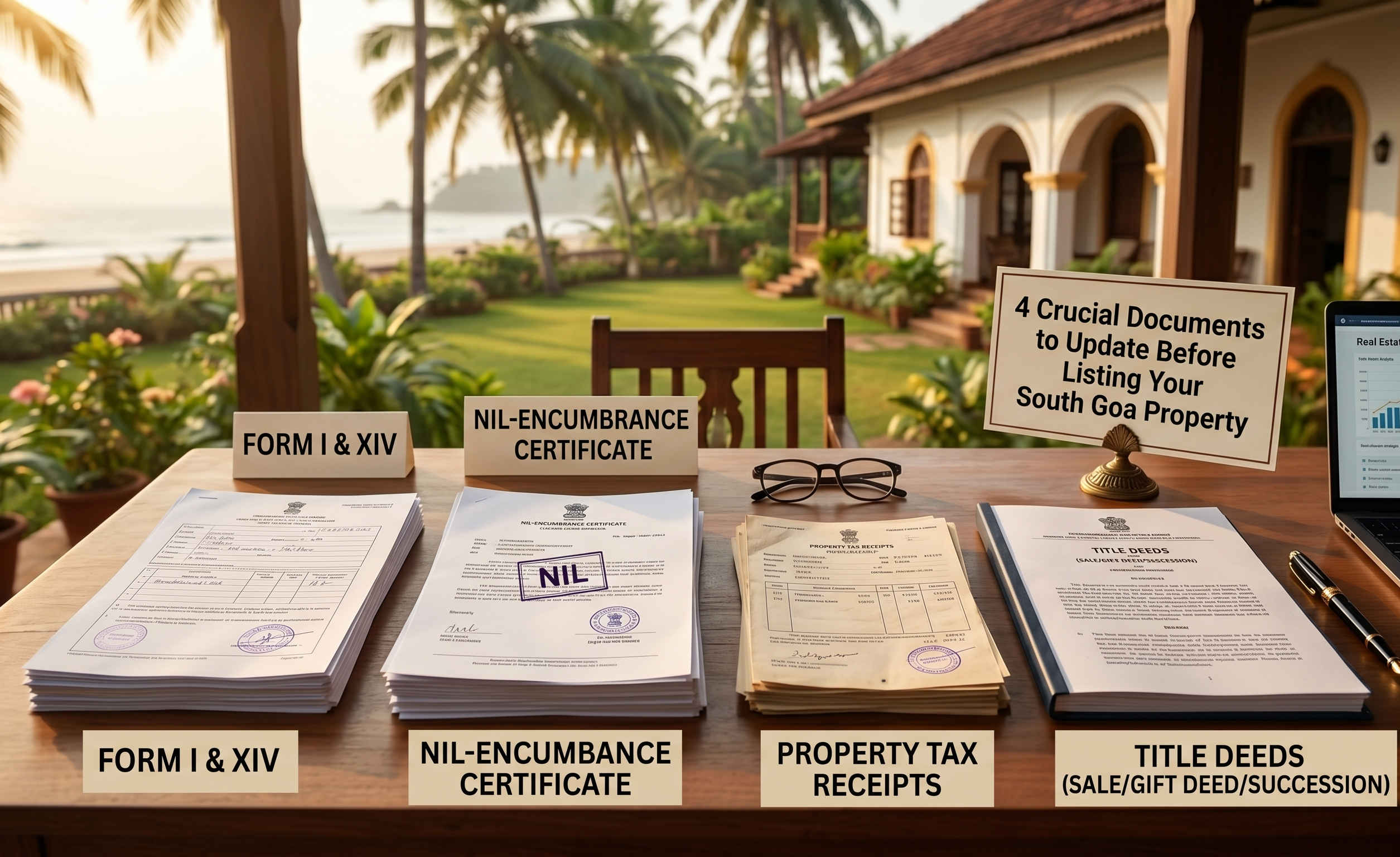
4 Crucial Documents to Update Before Listing Your South Goa Property
Selling a home in South Goa is no longer just about finding the right buyer or setting the right price. In 2026, documentation has become one of the biggest deal-makers—or deal-breakers—in property transactions. Buyers are more cautious, banks are stricter, and legal due diligence is happening earlier than ever.
Many sellers only start collecting papers after they receive an offer. That is often too late. If a buyer’s loan application is rejected because your paperwork is incomplete, outdated, or inconsistent, the deal may collapse before the Agreement to Sell is even finalized.
That is why understanding the documents required to sell property in Goa is essential before listing your home. Whether you own a villa, apartment, ancestral house, plot, or independent home in South Goa, your paperwork must be updated, accurate, and buyer-ready.
Here is the 2026 pre-sale checklist every South Goa seller should follow before entering the market.
Why Buyers Walk Away from Incomplete Paperwork
A serious buyer does not just inspect the house. They inspect the risk.
In South Goa, buyers and their legal advisors usually review ownership history, land classification, survey details, house tax records, mutation status, Form I-XIV, approvals, and conversion documents before moving forward. If anything looks unclear, the buyer may pause the negotiation, demand a lower price, or walk away entirely.
Banks are even stricter. A property may look perfect physically, but if the seller’s paperwork is not updated, loan approval can be denied. This is especially common when there are mismatches in names, outdated land records, missing clearances, or unresolved negative declarations.
Incomplete paperwork creates three major problems:
- It delays the sale process.
- It weakens buyer confidence.
- It gives buyers room to negotiate aggressively.
A proper Goa property sale checklist helps sellers avoid these issues before they damage the deal. The more prepared you are, the more confident your buyer becomes.
Document 1: Updated Form I-XIV (Minus Negative Declarations)
Form I-XIV is one of the most important land records in Goa. It shows key details about the property, including survey number, sub-division number, area, occupant details, tenant-related entries, and other declarations.
For any seller, an updated Form I-XIV is essential. But having the form is not enough. It must be current, accurate, and free from negative declarations that could raise legal concerns.
Common issues sellers discover include outdated ownership names, tenant or mundkar-related entries, incorrect survey details, and unresolved remarks. These issues can immediately worry buyers, especially if they are applying for bank finance.
A buyer’s lawyer will often examine Form I-XIV very carefully. If there are negative declarations or unexplained entries, the buyer may assume the property has possession risks or future dispute potential.
Before listing, sellers should verify that the latest Form I-XIV reflects the correct ownership status and does not contain problematic entries. If there is an issue, it is better to begin the Form I-XIV update Goa process before marketing the property.
An updated Form I-XIV helps establish confidence. It tells buyers that your property records are current and that the transaction is less likely to face legal objections later.
Document 2: Current House Tax & PWD Clearances
Many sellers underestimate the importance of basic municipal and utility-related clearances. But in a property sale, small unpaid dues or outdated receipts can create unnecessary friction.
House tax receipts prove that property-related taxes have been paid to the local authority. Buyers usually ask for the latest receipts because they do not want to inherit unpaid dues. If the property has pending tax liabilities, the buyer may demand that they be cleared before signing.
PWD-related clearances or water connection records are also useful because they help establish that the property has legitimate utility access. In some cases, water dues or connection inconsistencies can delay handover or raise concerns during due diligence.
Before listing your South Goa home, collect and update:
- Latest house tax receipts
- Water bill payment records
- PWD connection details, where applicable
- No-dues confirmations, if available
These documents may seem routine, but they help make your property look organized and sale-ready. For buyers, updated tax and utility records show that the seller has maintained the property responsibly.
In a competitive market, clean paperwork can be as persuasive as clean interiors.
Document 3: The Approved Survey Plan / Cadastral Plan
The approved survey plan or cadastral plan is another critical document in the documents required to sell property in Goa checklist. It helps identify the exact boundaries, shape, access, and extent of the property.
This document is especially important for independent houses, ancestral homes, plots, villas, and properties with open land. If the physical boundaries on-site do not match the survey records, buyers may become nervous.
Common problems include boundary mismatches, encroachments, unclear access roads, overlapping claims, or differences between the built structure and recorded land area. Even if the issue seems minor, it can become a major concern during bank valuation or legal verification.
In South Goa, where many homes are older and land parcels may have been inherited or subdivided over time, survey clarity is crucial. A buyer wants to know exactly what they are purchasing.
Before listing, sellers should review the cadastral plan and compare it with the physical site. If there are discrepancies, they should be addressed before buyer visits begin.
An approved survey plan gives your listing more credibility. It supports your asking price, reduces uncertainty, and helps buyers make faster decisions.
Document 4: Conversion Sanad & Mutation Certificate
The Conversion Sanad and Mutation Certificate are two documents that often become deal-breakers if they are missing or outdated.
A Conversion Sanad confirms that land has been legally converted for non-agricultural use, such as residential or commercial purposes. This is especially important if the property was originally agricultural, orchard, or undeveloped land.
Without a valid Conversion Sanad, buyers may fear that the current use of the property is not legally permitted. Banks may also hesitate to finance the purchase.
The Mutation Certificate, on the other hand, reflects changes in ownership in government land records. It does not replace a sale deed, but it is an important supporting document that shows the property has been updated in the revenue records.
If mutation has not been completed after inheritance, sale, partition, or transfer, the buyer’s lawyer may raise objections. The buyer may ask the seller to complete the mutation before proceeding.
Together, these documents help sellers demonstrate a clear property title Goa buyers can trust.
Before listing, confirm that:
- The land use matches the actual property use.
- The Conversion Sanad is available where required.
- Mutation records reflect the current legal owner.
- There are no unresolved inconsistencies between sale deed, Form I-XIV, and revenue records.
These checks can prevent major delays after a buyer is already interested.
Get a Free Pre-Listing Document Audit Today
If you are planning to sell your South Goa home, do not wait until a buyer finds problems in your paperwork. By then, you may already be under price pressure or at risk of losing the deal.
Builders & Brokers helps sellers prepare their property before it reaches the market. Their pre-listing document audit is designed to identify the exact gaps that could delay a sale, reduce buyer confidence, or trigger loan rejection.
With Builders & Brokers, sellers get support in reviewing key documents such as Form I-XIV, house tax receipts, survey plans, cadastral records, Conversion Sanad, mutation documents, and other property papers relevant to the transaction.
The goal is simple: make your property buyer-ready before it is listed.
Here is how Builders & Brokers helps:
- They review your current paperwork and highlight missing or outdated documents.
- They identify red flags that buyers and banks may object to.
- They guide you on what must be updated before listing.
- They help position your property with stronger legal confidence.
- They connect your listing with serious, qualified buyers once documentation is in order.
For sellers who feel overwhelmed by the paperwork, this audit is a practical first step. It turns confusion into clarity and helps avoid last-minute transaction stress.
If you want to sell faster and with fewer complications, start with your documents. A clean file can make your property more attractive, more negotiable, and more finance-friendly.
FAQs
1. What are the most important documents required to sell property in Goa?
The key documents usually include sale deed, updated Form I-XIV, house tax receipts, survey or cadastral plan, Conversion Sanad where applicable, mutation records, identity documents, and any approvals linked to the property.
2. Why is Form I-XIV important before selling a property in Goa?
Form I-XIV shows important land record details, including ownership and declarations. Buyers and banks review it to check whether the property has negative entries, tenancy concerns, or ownership inconsistencies.
3. Can I sell my South Goa home if the Conversion Sanad is missing?
It depends on the land classification and property type. If conversion is legally required and the Sanad is missing, buyers or banks may refuse to proceed until the issue is resolved.
4. How can I make sure I have a clear property title Goa buyers will trust?
Start with a professional document review. Check your ownership chain, Form I-XIV, mutation records, survey plan, tax receipts, and approvals before listing the property.
5. Why should I get a pre-listing document audit from Builders & Brokers?
A pre-listing audit helps identify documentation issues before buyers find them. Builders & Brokers can guide you on updates, reduce transaction delays, and help present your property as legally prepared and market-ready.


