
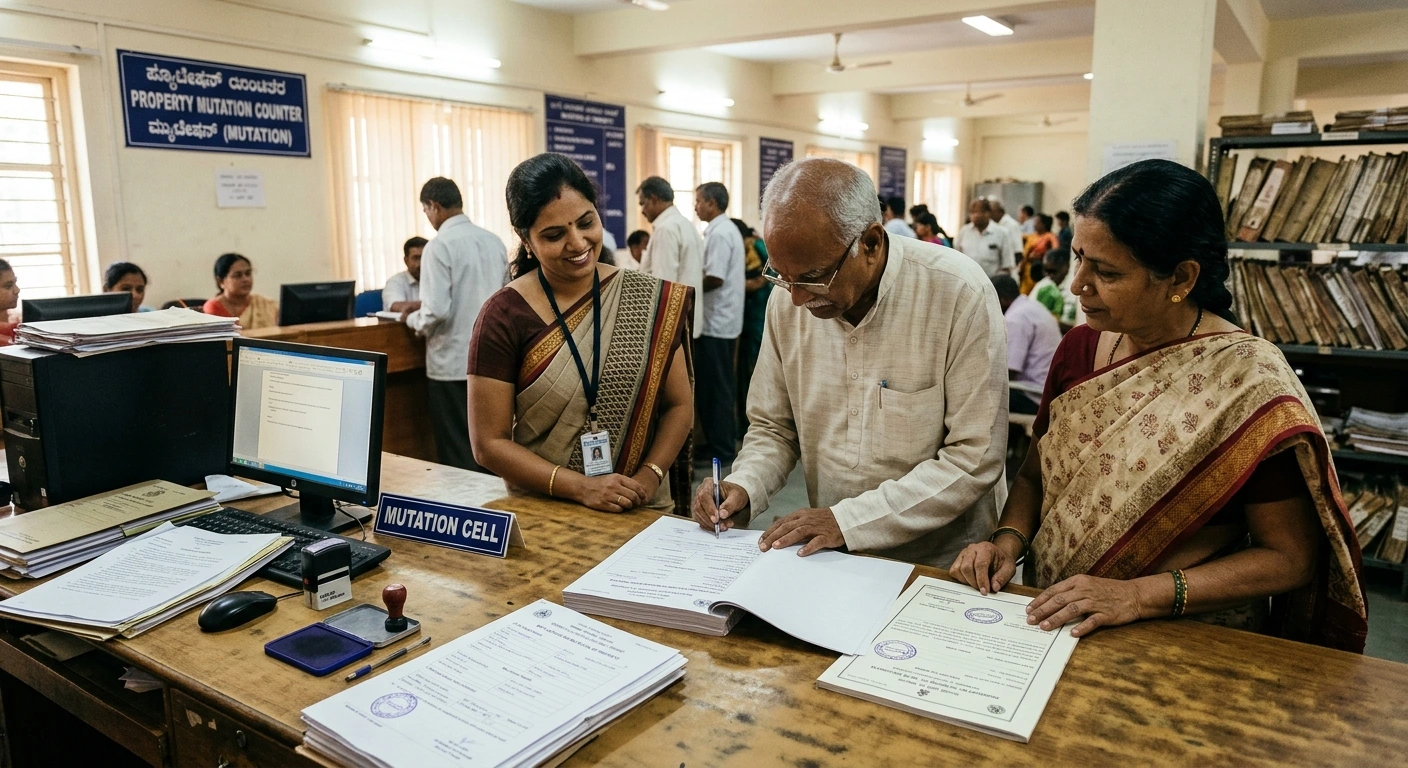
Mutation of property after death of owner Goa
Inheriting ancestral land or a family home in Goa is a profound blessing, deeply connecting you to the state’s rich heritage. However, from a legal and administrative standpoint, claiming your inheritance is rarely a simple walk in the park. In the Goan real estate market, property disputes are common, particularly with ancestral properties where the flow of title is unknown or outdated. Many legal heirs assume that holding a will or simply being the next of kin automatically makes them the documented owner of the property. This is a critical misconception.
To be recognized as the legal owner by the government, you must successfully complete the Mutation of property after death of owner Goa. This administrative process updates the revenue records (specifically the Form I & XIV in Goa) by replacing the deceased owner’s name with the names of the rightful heirs. Without this crucial update, you cannot legally sell the land, apply for construction licenses, merge fragmented plots, or even secure a bank loan.
At Builders & Brokers, we understand that grieving families and busy investors do not have the time to navigate the bureaucratic maze of government offices. We specialize in untangling complex inheritance paperwork, providing end-to-end support so you can secure your family’s legacy without the stress.
Conquering the Death Certificate Hurdles
Before you can even apply for a mutation, you must prove the passing of the original owner. In Goa, dealing with historical vital records often uncovers a hornet’s nest of clerical errors. Portuguese-era naming conventions, aliases, and translation errors mean that the name on the property deed rarely matches the name on the death registry perfectly.
A single mismatched letter can cause the Mamlatdar to reject your mutation application. This is where our expertise as a Death certificate name correction consultant Goa becomes invaluable. We specialize in correcting spelling in death records for land mutation, coordinating with the Civil Registrar, drafting the necessary legal affidavits, and managing gazette publications to ensure your ancestral documents align perfectly with your property title.
What if the records are entirely missing? Decades ago, not all passings were systematically documented. If you are struggling to find the necessary paperwork, we provide dedicated lost death certificates of ancestors Goa help. Our team physically traces archival records across Taluka offices. In cases where a death occurred at home and was never officially registered, we offer professional help for late death registration Goa. We manage the complex litigation required to obtain an Executive Magistrate’s order, compelling the authorities to create a late entry so your mutation process can finally move forward.
Merging Ancestral Plots: The Legal Pathway
As generations pass, Goan families often find themselves holding multiple fragmented parcels of adjoining land. To maximize the land’s development potential or to prepare it for a unified sale, heirs frequently seek to amalgamate (merge) these parcels.
A question we hear often is: How to merge plots if the owner is deceased? The golden rule of Goan real estate is that you cannot alter the physical boundaries of a property until the legal title is updated. You must first complete the mutation of property after death of owner Goa to transfer the distinct survey numbers into the names of the living heirs. Only after the revenue records reflect the current generation can you apply to the Town and Country Planning (TCP) Department and the Settlement and Land Records (DSLR) office for amalgamation.
This brings up another critical legal hurdle: Can heirs amalgamate land without a Succession Deed? Absolutely not. Under the unique Goan Civil Code, a Deed of Succession (Inventory Proceedings) is mandatory to establish who the legal heirs are and what their respective shares entail. You cannot bypass this legal step. Builders & Brokers coordinates with senior property lawyers to ensure your succession deeds are drafted and registered flawlessly, paving the way for mutation and amalgamation.
During this process, old survey plans often clash with modern digital measurements. Our team excels at resolving discrepancies in area during land merging. We work alongside empaneled surveyors to rectify area mismatches between the old title deeds and the latest DSLR records, ensuring your newly merged plot has a clean, undisputed boundary.
End-to-End Support with Builders & Brokers
You shouldn’t have to manage these intricate legal and administrative tasks by remote control. Builders & Brokers acts as your dedicated local liaison. We handle the paperwork, endure the long queues at the Mamlatdar and Talathi offices, and answer the technical queries raised by revenue officials. From fetching a century-old death record to delivering your freshly mutated Form I & XIV, our end-to-end support ensures your property rights are firmly established.
Frequently Asked Questions (FAQ)
To successfully mutate an inherited property, you will typically need:
An authenticated copy of the deceased owner’s Death Certificate.
A registered Deed of Succession or a court order from Inventory Proceedings proving legal heirship.
The latest Form I & XIV (revenue record) of the property
The original Title Deed / Sale Deed of the deceased
Aadhaar and PAN cards of all the legal heirs applying for the mutation.
A formal mutation application submitted to the local Mamlatdar.
No. Before any land can be amalgamated (merged) or subdivided, the current applicants must prove they are the absolute legal owners. Without a Succession Deed, the government will still view the deceased person as the owner, and no land alterations will be permitted.
The process involves three distinct phases: First, complete the succession and mutation process to transfer all the plots into the names of the living heirs. Second, hire a licensed surveyor to draft an amalgamation plan. Third, submit this plan along with the updated Form I & XIV to the TCP and DSLR departments for final approval and boundary merging.
Applications often get stalled due to minor discrepancies, such as misspelled names across different documents, or unresolved boundary disputes. Correcting spelling in death records for land mutation is a frequent prerequisite to getting a stalled file moving again.
While your presence might be required for specific legal signatures (like the registration of the Succession Deed), you do not need to be present for the day-to-day administrative follow-ups. Builders & Brokers handles the routine liaison and paperwork on your behalf.


