
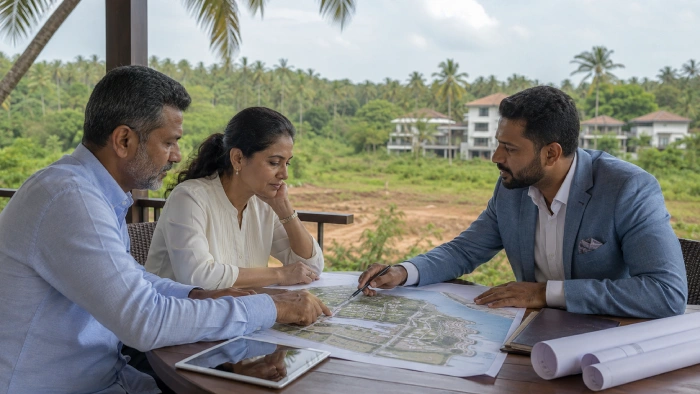
Joint Venture Discussions in Goa: Questions Landowners Should Ask First
A joint venture discussion can sound exciting for Goa landowners. Instead of selling the property outright, the owner may be approached with an idea: contribute the land, allow another party to plan or develop, and explore a shared outcome.
But before saying yes, landowners should slow down and ask the right questions.
A joint venture is not just an opportunity. It is a serious property decision. It can affect ownership expectations, family decisions, timelines, responsibilities, commercial understanding, and future control over the property. That is why a landowner should never agree based only on verbal confidence, projected numbers, or a promising presentation.
If you are a landowner in Goa and someone has approached you for a joint venture, Builders & Brokers can help you review the discussion, understand the questions to ask, and decide whether the opportunity deserves deeper professional review before you commit.
Quick Answer: What Should Landowners Ask Before Saying Yes?
Before saying yes to a joint venture discussion in Goa, landowners should ask who the partner is, what they are proposing, what the owner is expected to give, what responsibilities each side will carry, how timelines will be handled, what commercial terms are being discussed, what professional review is needed, and what happens if the plan does not move forward.
Question 1: What Exactly Is Being Proposed?
Many JV conversations begin casually. Someone may say they can develop the land, build villas, bring buyers, manage the project, or create better value than a direct sale. But the first question should be simple: what exactly is being proposed?
Is it a true joint venture? Is it a development management arrangement? Is it a buyer trying to delay purchase? Is it a developer testing landowner interest? Is it only an informal idea?
Landowners should not assume that every “JV offer” means the same thing. The proposal must be clearly explained before it is taken seriously.
Question 2: Who Is the Other Party?
Before discussing numbers, landowners should understand who they are speaking to. A serious partner should be open about their background, experience, role, resources, past work, and ability to carry the discussion forward.
The landowner should ask:
- Have they handled similar property discussions before?
- Are they a developer, investor, consultant, broker, or buyer?
- Who will be responsible for execution?
- Who will bring professional teams?
- What proof of seriousness can they share?
Builders & Brokers helps landowners look beyond surface-level interest and review whether a JV conversation is worth deeper attention.
Question 3: What Does the Landowner Have to Commit?
A landowner should know what is being expected before saying yes. Some discussions may only require a meeting. Others may slowly move toward exclusivity, document sharing, signing, access to records, permission to market, or a formal commitment.
This is where owners must be careful. Do not agree to exclusivity, marketing rights, or written terms without understanding the impact.
The question is not only “What will I get?” It is also “What am I giving control over?”
Question 4: Are All Family Members Aligned?
Many Goa properties are family-owned, inherited, or connected to multiple decision-makers. A JV discussion can become complicated if one person shows interest but others are not ready.
Before moving ahead, landowners should ask whether the family is aligned on the idea itself. Are all key people open to discussion? Is anyone expecting a direct sale instead? Does anyone object to development or partnership? Who will make final decisions?
Family alignment should happen before outside parties are given confidence.
Question 5: What Are the Commercial Terms Being Discussed?
JV conversations often include commercial ideas such as share, constructed area, revenue, profit, sale proceeds, staged payments, or other arrangements. These should not be accepted casually.
Landowners should ask how the commercial structure is being explained and what assumptions it is based on. They should also ask what costs, responsibilities, risks, and delays may affect the final outcome.
A high-sounding number is not enough. The structure behind the number matters.
Question 6: What Professional Review Is Needed?
Before any commitment, landowners should understand what professional review is required. This may include legal review, title-related review, zoning or planning-related checks, tax guidance, architectural input, or project advisory depending on the property and proposal. One of the first steps is obtaining a property title review in Goa so ownership records and title-related matters can be reviewed before moving further into joint venture discussions.
The landowner does not need to personally know every technical step. But they should know that a JV should not move forward without proper review.
This blog is not legal advice. Owners should consult qualified professionals before signing, accepting money, giving rights, or making binding commitments.
Question 7: What Happens If the Plan Fails?
Many JV discussions focus on the upside, but landowners should ask about the downside.
What happens if the partner cannot proceed?
What happens if approvals take longer than expected?
What happens if market conditions change?
What happens if the family changes its mind?
What happens if the project idea is no longer practical?
What happens if one side wants to exit?
A serious discussion should not avoid these questions. It should address them clearly.
Question 8: How Will Communication Be Managed?
JV discussions can become confusing when there are too many informal calls, changing terms, and unclear responsibilities. Landowners should ask how communication will be managed.
Who will be the main contact?
Will points be documented after meetings?
Who will coordinate with professionals?
How will changes be recorded?
What is the next step after each discussion?
Clear communication protects the landowner from misunderstandings.
Question 9: Is a JV Actually Better Than Selling?
A joint venture is not automatically better than a sale. Some landowners may benefit from a clean sale if they want certainty, faster closure, or less long-term involvement. Others may prefer to explore JV only if the opportunity is serious, structured, and professionally reviewed.
Before saying yes, the landowner should compare the JV route with a direct sale, hold strategy, or other property direction.
Builders & Brokers can help Goa landowners compare these options before they commit to one path.
Final Recommendation
Joint venture discussions in Goa can be worth exploring, but landowners should not say yes too quickly. The right questions can protect the owner from confusion, weak proposals, unrealistic promises, and rushed commitments.
Before moving forward, ask what is being proposed, who the partner is, what the landowner must commit, whether the family is aligned, what the commercial terms mean, what review is needed, and what happens if the plan does not work.
Builders & Brokers helps Goa landowners review JV discussions, compare property options, assess buyer or developer interest, and approach development opportunities with clarity. Before saying yes to a joint venture, speak to Builders & Brokers and understand the questions that matter.
FAQs
Should landowners say yes to a JV offer quickly?
No. Landowners should first understand the proposal, partner background, commercial terms, family alignment, professional review requirements, and exit conditions.
Is a joint venture better than selling land?
Not always. A JV may suit some landowners, while a direct sale may be better for others. The right choice depends on the owner’s goals, risk comfort, timeline, and property situation.
What is the biggest risk in a JV discussion?
One major risk is agreeing too early without understanding responsibilities, timelines, commercial terms, legal review, or what happens if the plan fails.
Can Builders & Brokers help with JV discussions in Goa?
Yes. Builders & Brokers can help landowners review JV discussions, compare partner interest, assess options, and approach development opportunities more carefully.


