
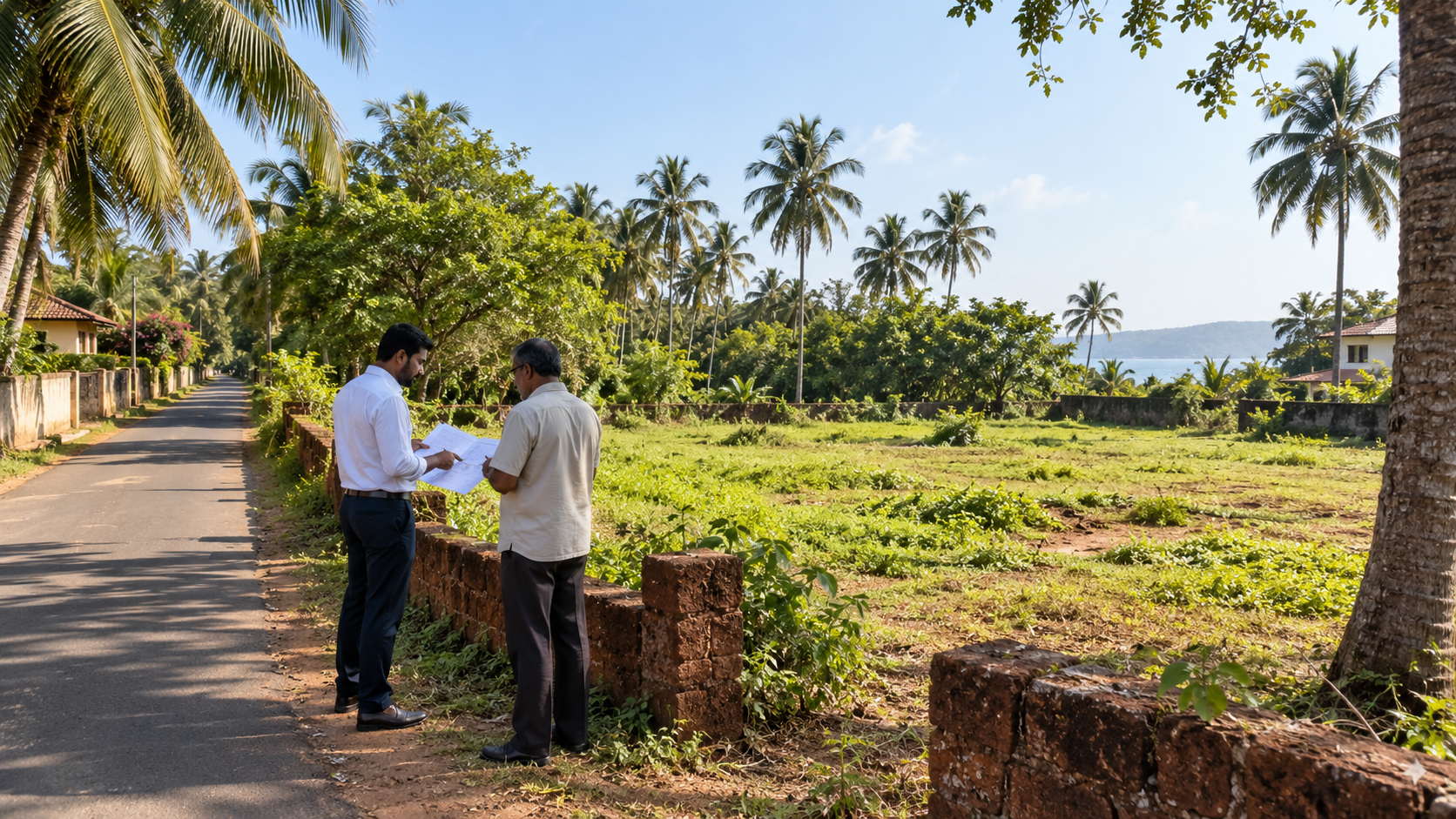
Selling South Goa Land With Shared or Unclear Road Access: Seller Guide
A South Goa land parcel may look attractive because of its location, size, surroundings or future use. But one question can quickly change a buyer’s confidence: how exactly do you reach the property?
Some land parcels have direct road frontage. Others are reached through a shared road, private lane, family property, neighbouring parcel or an approach that has been used informally for many years.
For sellers, the problem begins when physical access and legally established access are treated as the same thing.
A buyer may be able to drive to the property today, but still want to understand who owns the approach, whether it is shared, how wide it is, whether the arrangement is documented and whether future use could be affected.
If you are preparing to sell land in South Goa with shared or unclear access, Builders & Brokers can help you organise the property information, prepare for buyer questions and coordinate the appropriate survey, title and professional checks before you list. If you are ready to sell land in South Goa, preparing this information before marketing can help serious buyers understand the property more clearly.
Quick Answer: What Should Sellers Clarify About Road Access?
Before listing South Goa land, sellers should understand how the property is physically accessed, whether the approach is direct or shared, which survey parcels are involved, what available plans or documents show and whether professional verification is needed.
Do not advertise “clear road access” or a specific road width unless the claim can be properly supported.
Start With What Exists on the Ground
Walk the actual approach to the property.
Do not rely only on how family members describe it.
Record practical details such as:
- Where the approach begins
- Whether vehicles can currently reach the property
- Whether the route passes through another parcel
- Whether a gate is involved
- Whether neighbours also use the same road
- Approximate physical width
- Surface condition
- Whether access changes during the monsoon
- Whether any section is obstructed
- Where the property entrance actually sits
This creates the factual starting point for the sale discussion.
It does not establish the legal position, but it helps the seller avoid giving buyers vague or inconsistent answers.
Direct Road Frontage and Shared Access Are Different
A property directly adjoining a public or recognised road is different from land reached through a shared or private approach.
Sellers should describe the distinction clearly.
A buyer may ask:
- Is the property directly touching the road?
- Is part of the approach shared?
- Who maintains the road?
- Does the route cross another owner’s property?
- Is the same route used by several houses?
- Is access dependent on a gate or another person?
- Is the road shown on available plans?
If the seller does not know, say that verification is required.
Avoid turning an assumption into a selling claim.
Do Not Confuse Long-Term Use With Documented Rights
A family may have used the same approach for decades. That history may be relevant, but the seller should not automatically conclude that every future buyer will have an unquestionable legal right in exactly the same form.
Similarly, a visible track on the ground does not automatically establish its ownership, status or legal width.
Questions about easements, rights of way, access rights and title implications should be reviewed by qualified legal and land-record professionals.
For marketing purposes, the seller’s job is simpler: explain the known facts accurately and avoid unsupported conclusions.
Check the Survey Plan and Property Records
Available land records can help the owner understand the property layout before speaking to serious buyers.
Depending on the property, useful records may include:
- Survey plan
- Form I & XIV or other applicable land record
- Village map
- Old cadastral plan where relevant
- Partition or subdivision information
- Existing title documents
- Plans attached to earlier transactions
Look at how the property boundaries relate to the visible approach.
If the route used on the ground does not appear straightforward on the available plans, that is a signal to obtain professional clarification rather than ignoring the issue.
Builders & Brokers can help landowners organise these questions before buyers begin due diligence.
Be Careful When Quoting Road Width
Road width can become an important buyer question, particularly when the buyer is considering construction, larger vehicles or future development.
Do not quote a road width simply because someone estimated it visually.
Different measurements may be relevant:
- Width physically available today
- Width shown in a plan
- Width within a particular property boundary
- Narrow points along the route
- Gate-opening width
- Usable vehicle width
If road width is material to the buyer’s decision, recommend professional measurement and verification.
Statements such as “six-metre road guaranteed” should not appear in a listing unless properly supported.
Explain Shared-Access Arrangements Honestly
If several properties use the same approach, say so.
Buyers may want to know:
- How many properties use it
- Whether maintenance is shared
- Whether there are gates
- Whether parking blocks the route
- Whether larger vehicles can pass
- Whether construction vehicles have used it
- Whether disputes have occurred
- Whether any written arrangement exists
Do not describe a genuinely shared road as “private independent access” simply because the property feels secluded.
The right buyer may still be comfortable with shared access if it is explained transparently.
Prepare for the Site Visit
A buyer should be able to understand the access route during the visit.
Where practical:
- Meet the buyer at the beginning of the approach
- Show the full route rather than only the final entrance
- Point out shared sections
- Identify neighbouring boundaries cautiously
- Avoid claiming ownership of land that has not been verified
- Show relevant plans after the visit
- Explain anything that still requires clarification
This helps prevent a common problem: the buyer likes the land first and discovers the access question only during legal review.
What If the Access Is Unclear?
Do not rush to list the property with a strong road-access claim.
First determine what is unclear.
It could be:
- Ownership of the approach
- Exact boundary
- Route shown on plans
- Road width
- Historic family arrangement
- Use through another parcel
- Gate or obstruction
- Difference between old and current records
The next step may involve a survey professional, land-record verification or legal review depending on the issue.
An unresolved access question does not automatically mean the land cannot be sold. It means the seller should understand and disclose the uncertainty properly.
Avoid These Listing Mistakes
Sellers should avoid phrases such as:
- “Guaranteed road access”
- “Clear right of way”
- “Government road touching”
- “Wide motorable road” without support
- “No access issue”
- “Approved access”
- “Developer-ready road”
unless the relevant claim has been properly verified.
A more responsible listing may simply say:
“The property is currently approached through a shared access route. Buyers may review the relevant survey and title records during due diligence.”
Clear language builds more trust than overstatement.
Final Recommendation
Road access should be clarified before South Goa land is marketed aggressively.
Start with the physical route, compare it with available property records, understand whether access is direct or shared and identify any point that still requires professional review.
The seller does not need to personally resolve every legal question before the first conversation, but they should know what is verified and what is not.
Builders & Brokers helps South Goa landowners prepare properties for sale, organise survey and access information and communicate clearly with serious buyers. Speak to Builders & Brokers before listing land with shared or unclear road access so the buyer discovers the facts from you—not as a late surprise during due diligence.
FAQs
Can land with shared road access be sold in South Goa?
Potentially, yes. Shared access itself does not automatically prevent a sale, but buyers will usually want clarity on how the property is accessed and what supporting records exist.
Does a visible road prove a legal right of access?
Not necessarily. Physical use and legal rights are separate questions and may require professional review.
Should sellers obtain a survey plan before listing?
A current or official survey plan can help sellers understand the parcel and prepare for buyer questions, particularly where boundaries or access are unclear.
Can I mention the road width in my property advertisement?
Only use specific measurements that can be supported. If the width is uncertain, obtain proper measurement or describe the access without making an unsupported claim.
Can Builders & Brokers help with an access issue?
Builders & Brokers can help sellers organise property information, buyer communication and the appropriate professional review. Legal determinations or survey conclusions should come from qualified professionals.


